






Imagine your users opening your product for the first time. Do they navigate it easily, or do they struggle to find what they need? The difference often comes down to your company’s UX culture how much your team prioritizes the user experience in every decision. Building a strong UX culture isn’t something that happens overnight.
It requires collaboration, empathy, and a shared commitment across teams to put users first. It also means creating an environment where everyone feels responsible for the user experience, encouraging open communication, and constantly learning from user feedback.
In this blog, we’ll explore practical ways you can create a user-focused mindset in your organization, improve collaboration, and make your products more intuitive and enjoyable for the people who use them.
What is UX Culture?
UX culture is the mindset in a company that puts the user at the heart of everything. It’s not just about having good design or a nice-looking product. Instead, it’s about making sure that every step from planning and building to testing and improving keeps the user’s needs in mind.
In a workplace with a strong UX culture, teams don’t just ask, “Does this work?” They ask,
- Is this simple?
- Is it enjoyable?
- Will it make sense to our users?
This shift in thinking ensures that every decision, big or small, is made with the user in mind.
When a company builds a healthy UX culture, user experience becomes part of its DNA. It’s not treated as an afterthought; it’s a guiding principle that influences how products are designed, how services are delivered, and even how teams collaborate.
UX culture is what turns good products into experiences people love and trust and to achieve this, it’s not just the responsibility of one team; the entire organization must be involved, and that’s where the biggest challenge lies. Keep reading to learn how to build an organization with customer experience as its guiding principle.
Benefits of a Strong UX Culture
When you focus on building a strong UX culture, you’re creating more than just well-designed products; you’re shaping an entire environment where users come first and your team works smarter. Let’s break down the benefits you’ll see:
1. Happier and more satisfied users
When you make decisions with users in mind, your product or service becomes intuitive, easy to navigate, and enjoyable. Users feel heard and understood, which naturally increases their satisfaction and makes them more likely to stick with your brand.
2. Stronger trust and loyalty
People remember great experiences. When your users consistently have positive interactions with your product or service, they start trusting your brand. Loyal users are more likely to return, buy again, and even recommend your company to others, helping you grow organically.
3. Fewer costly errors and revisions
A strong UX culture means you identify problems before they reach your users. By focusing on usability and feedback early, you avoid building features that confuse or frustrate users. This saves time, reduces development costs, and prevents unnecessary fixes later.
4. Improved collaboration across teams
UX culture encourages everyone, from designers and developers to marketers and managers, to think about the user. This shared mindset breaks down silos and improves communication, making teamwork smoother and more productive.
5. Better business outcomes
When users are happy, and processes run efficiently, your business benefits. Positive user experiences lead to higher customer retention, better reviews, and increased referrals. All of this contributes to sustainable growth and a stronger competitive advantage.
How to Build a Strong UX Culture?
Building a strong UX culture in your organization doesn’t happen overnight. It’s a gradual process that takes persistence, patience, and the willingness to involve your team at every step. To help you get started, here are some key learnings on how to strengthen UX culture in your workplace.
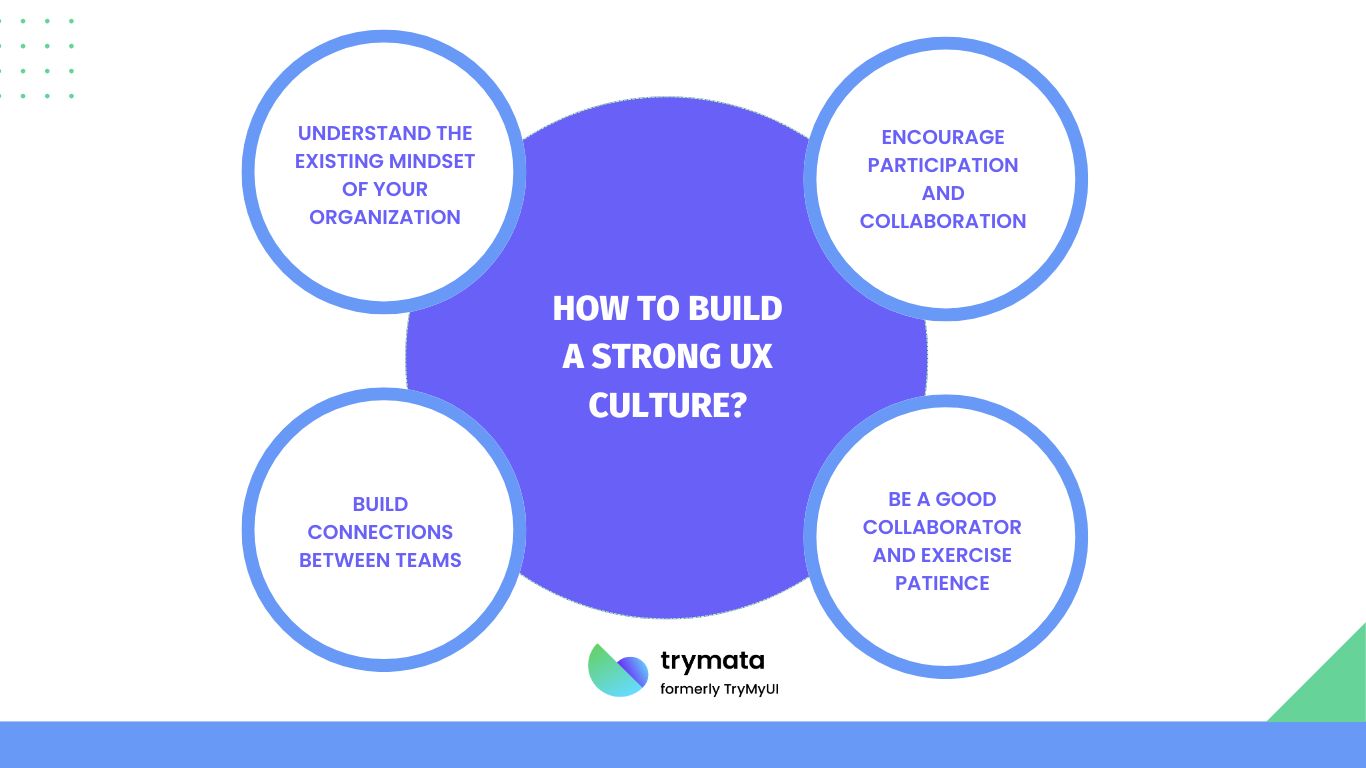
1. Understand the existing mindset of your organization
Before you can introduce a people-centered approach, it’s important to understand how your teams currently think about UX. Different teams may have varied perspectives, so start by working with them and understanding their approach and challenges.
You can then gently introduce your way of doing things by saying things like:
- Have you thought about trying it this way? Let me show you how I’ve done it.
- For this next project, let’s just try doing it this way.
- Getting your team involved early helps your ideas gain traction and start creating real impact.
2. Encourage participation and collaboration
A strong UX culture lasts only when teams and stakeholders actively participate. Collaboration ensures everyone shares ideas, feedback, and works together toward common goals.
Mark shared how he encouraged teams to observe moderated research sessions. Seeing real users interact with the product helped the team notice problems and understand the context behind them. It also helped bridge the empathy gap with customers.
The key takeaway: get stakeholders involved. When they experience the user journey firsthand, they understand the value of UX and are more likely to support it.
3. Build connections between teams
Building relationships across the organization is critical. Start with UX advocates or champions in other teams, and then spread your approach gradually.
“You are not going to change a culture by yourself. Start building relationships across teams to spread your message and get other teams on board.”
When one team sees the value of UX, it naturally encourages others to take notice. Conversations spread, and gradually, your approach becomes more widely accepted. Relationships are absolutely fundamental to creating a lasting UX culture.
4. Be a good collaborator and exercise patience
Changing culture takes time, effort, and patience. Don’t expect instant results. Focus on building key relationships, being someone people enjoy working with, and sharing your expertise in a supportive way.
Take the time to build relationships, be valued for your approach, and then you can start making a real difference and getting people on board.
The combination of collaboration, patience, and consistent effort is what makes UX culture stick.
How Trymata Helps in Building a Strong UX Culture?
Creating a strong UX culture in your organization isn’t just about hiring designers or running occasional user tests; it’s about making user experience a part of your everyday workflow. And that’s where Trymata can make a real difference.
Trymata is a platform that helps you see your product from the user’s perspective, making it easier for your team to understand what works, what doesn’t, and how to improve. Here’s how Trymata can help you build a strong UX culture in your organization:
1. Get real user insights easily
With Trymata, you can quickly collect feedback directly from users. You don’t have to guess how your product is being used. Trymata shows you exactly where users struggle, what they enjoy, and what confuses them. When your team sees real user behavior, it becomes easier to make user-centered decisions.
2. Involve your whole team
Trymata isn’t just for designers. Developers, product managers, and even marketers can observe user sessions and gain a firsthand understanding of the user experience. This shared exposure helps your team build empathy for users and reinforces the idea that UX is everyone’s responsibility.
3. Encourage collaboration and discussion
Trymata provides tools that allow teams to share insights, highlight problems, and suggest improvements together. By observing user interactions in real-time, your team can engage in meaningful discussions about design choices and collaborate on solutions that genuinely enhance the experience.
4. Make UX a habit, not an afterthought
With Trymata, user testing can be done frequently and consistently, not just at the end of a project. This encourages your team to think about UX from the start, making user-centered thinking part of your company’s culture rather than a one-time task.
Conclusion
Building a strong UX culture doesn’t happen overnight. It takes time, patience, and a team-wide commitment to putting users first. By encouraging collaboration, fostering empathy, and continuously learning from user feedback, you can create an environment where everyone, from designers to managers, makes decisions with the user in mind.
Small steps, like involving stakeholders in user research or observing real user interactions, can lead to big changes over time. A strong UX culture not only improves the products you create but also motivates your team and strengthens your business.
Tools like Trymata can make this journey easier by providing clear insights into how users interact with your product. By helping your team see the experience through the user’s eyes, Trymata supports collaboration, empathy, and better decision-making, helping you build a lasting, user-centered culture.